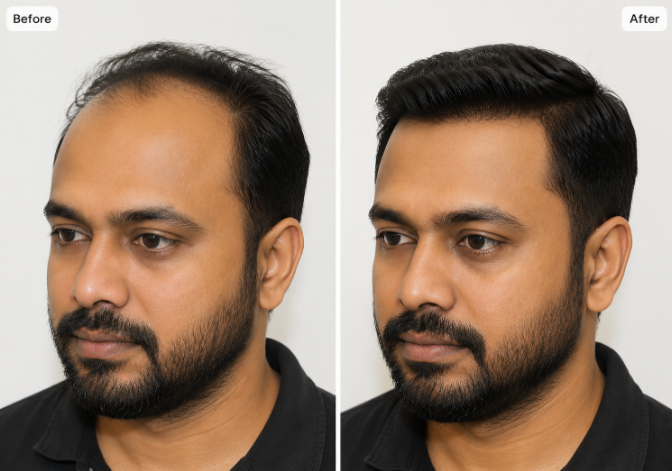
You look in the mirror and notice the hairline that keeps moving back, the thinning patches that are getting harder to hide, the cap you’ve started wearing every day just to feel confident. Hair loss affects nearly 60% of Indian men by age 35 and a growing number of women too. And while shampoos, oils, and home remedies promise the world, most of them simply don’t address the root cause because once a follicle is dead, no topical product can bring it back to life.
That’s where a hair transplant comes in. Not as a last resort, but as a medically proven, permanent solution that uses your own living hair follicles to restore what’s been lost. If you’ve been wondering whether a hair transplant in Chennai is right for you, how it works, whether it’s painful, and where to get it done safely this guide answers every single one of those questions.
Quick Stats: 98% Graft Survival Rate · 6–12 Months for Full Results · 1–3 Sessions Needed · Lifetime Lasting Results
What Exactly Is a Hair Transplant?

Think of your scalp like a garden. Some areas of this garden, specifically the back and sides of your head have really strong, healthy plants (hair follicles) that are genetically resistant to the hormone DHT (Dihydrotestosterone the main reason most people go bald). Other areas, like the top and front, are more vulnerable to DHT and start losing hair over time.
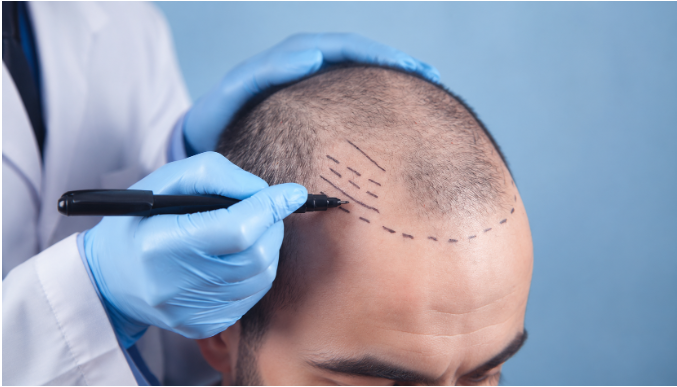
A hair transplant procedure is basically a process of taking those strong, DHT-resistant plants from the back of your garden and replanting them in the areas where the plants have died. Because these follicles are genetically resistant to balding, they continue to grow even in their new location permanently.
The transplanted hair is 100% your own hair. There’s no synthetic material, no foreign body, no wig, just your real hair, relocated to where it’s needed most. This is what makes hair transplantation the only permanent solution for hair loss that science currently offers.
Expert Insight: Hair transplant surgery has come a very long way in the last decade. The old days of “hair plugs” that looked unnatural are over. Modern FUE and DHI techniques create results so natural that even your barber won’t be able to tell the difference.
Not sure if you’re the right candidate? Book a expert assessment at Elixify →
Why Does Hair Loss Happen in the First Place?
Understanding why your hair is falling is just as important as knowing how to fix it. Hair loss (medically called alopecia) has several causes, and not all of them need a hair transplant. Here are the most common ones:
- Genetic Hair Loss (Androgenetic Alopecia)
This is the most common reason responsible for about 95% of all hair loss cases. It’s what people commonly call “male pattern baldness” or “female pattern hair loss.” If your father, grandfather, or maternal uncles have gone bald, there’s a higher chance you might too. This type follows a predictable pattern: in men, it starts at the temples and crown; in women, the parting gradually widens.
- Stress-Related Hair Loss ( Telogen Effluvium)
Major stress, illness, surgery, or even a crash diet can push large numbers of hair follicles into the resting phase, causing them to fall out in clumps 2–3 months later. The good news? This type is usually temporary and hair often grows back once the cause is addressed. Non-surgical treatments like GFC Hair Treatment or Exosome Therapy work well for stress-related hair loss.
- Medical Conditions
Thyroid disorders, iron deficiency, PCOS (in women), scalp infections like fungal or bacterial infections and autoimmune conditions like alopecia areata (patchy hair loss) can all cause significant hair fall. These require treating the underlying condition first.
- Traction Alopecia
Years of tight hairstyles, braids, ponytails, hair extensions can permanently damage follicles along the hairline. Hair transplant is often the only solution for this type of hair loss.
Important: A hair transplant works best when your hair loss has stabilised. If your hair is still actively falling in large amounts due to a medical condition, your doctor may recommend treating that first before proceeding with a transplant.
Who Is the Ideal Candidate for a Hair Transplant in Chennai?
One of the first things people ask is, “Is a hair transplant right for me?” The honest answer: not everyone is an immediate candidate, but most people with stable hair loss are. Here’s how specialists determine suitability:
You are typically a good candidate if you are over 22 years of age (when hair loss pattern is more predictable), have sufficient donor hair at the back and sides of your head, have been experiencing hair loss for at least 1–2 years that has now slowed or stabilised, are in good general health with no active scalp infections, and have realistic expectations understanding that transplanted hair takes 6–12 months to fully grow.
You may need to wait or explore alternatives if you are a teenager with rapidly progressing hair loss, have very limited donor hair density, have a blood-clotting disorder or uncontrolled diabetes, or are pregnant or breastfeeding. In such cases, non-surgical alternatives like GFC (Growth Factor Concentrate) Hair Treatment may be a better starting point to slow further loss and stimulate regrowth.
Unsure if you qualify? Our specialists assess your hair loss grade and recommend the right path
FUE vs DHI vs Sapphire: Which Hair Transplant Technique Is Best?
This is the most common area of confusion. Let’s break down the three main techniques:
FUE (Follicular Unit Extraction) : Most Popular Individual follicles are extracted from the donor area one by one using a tiny punch tool (less than 1mm). No linear scar. Fastest recovery among all methods.
DHI (Direct Hair Implantation) : Most Precise A special pen-like device (Choi pen) implants follicles directly without pre-making incisions. Ideal for hairline restoration and higher density results.
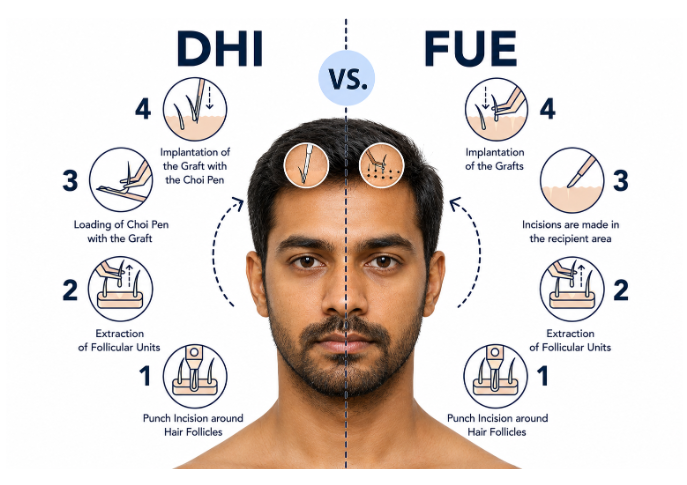
Sapphire FUE, Latest Technology Same as FUE but uses sapphire (a gemstone) blade to create recipient sites. Sapphire blades cause less tissue trauma, resulting in smoother healing and denser graft placement.
In all three methods, the surgeon takes hair follicles from the “safe zone” at the back of your head and places them in the thinning areas. The difference lies in the tools used and the precision of placement. Think of FUE as using a regular pen, DHI as using a fountain pen with finer control, and Sapphire FUE as using a razor-sharp precision blade instead of a regular cutter. All three produce excellent results, your surgeon at Elixify will recommend the most appropriate one based on your hair loss pattern and desired density.
The Hair Transplant Procedure: Step by Step (What Actually Happens)

A lot of people fear what they don’t understand. So here’s exactly what happens on the day of your hair transplant at Elixify:
Step 1 : Consultation & Hair Loss Assessment Your surgeon evaluates your scalp, grades your hair loss using the Norwood scale, assesses donor density, and maps out your new hairline keeping your facial symmetry and natural hair direction in mind.
Step 2 : Local Anesthesia (The Only “Uncomfortable” Part) The donor and recipient areas are numbed with local anesthesia tiny injections that feel like a light pinch. After this, you feel nothing at all. Most patients watch a movie or even nap during the procedure.
Step 3 : Donor Area Preparation & Follicle Extraction The back of the head is shaved (for FUE/Sapphire) and healthy follicles are extracted one by one using a micro-punch tool. This takes 2–4 hours depending on the number of grafts needed.
Step 4 : Graft Sorting & Preparation Extracted follicles are placed in a special preservation solution and sorted under a microscope by a trained technician single-hair grafts for the hairline, multi-hair grafts for density in the crown.
Step 5 : Implantation (The Art) The surgeon creates tiny recipient sites in the balding areas, following your natural hair growth angle (usually 30–45°). Follicles are then implanted this is where the artistry of the surgeon truly matters.
Step 6 : Post-Procedure Care & Instructions You leave the clinic with a bandaged donor area (removed next day), a detailed recovery protocol, prescribed medications, and a direct contact number for any questions.
The entire procedure typically takes 6–8 hours for a standard session of 2,000–3,000 grafts. You are awake throughout but feel no pain whatsoever after the anesthesia takes effect.
Recovery Timeline: What to Expect Week by Week
One of the biggest concerns people have is: how long before I can go back to normal life? The honest answer, most people are back at their desk jobs within 3–5 days and look completely normal within 2–3 weeks. Here’s the detailed timeline:
Days 1–3: Rest & Minimal Swelling Some mild swelling around the forehead (normal). Sleep with your head slightly elevated. Avoid touching or wetting the transplanted area. Take prescribed antibiotics and anti-inflammatory medications.
Days 4–7: First Gentle Wash Your doctor will show you how to gently wash your scalp with a special lotion. Tiny scabs (crusts) form around each graft this is normal. Do NOT scratch or pick them.
Weeks 2–4: Shock Loss (Don’t Panic!) This is the most alarming stage for patients of the transplanted hairs shed. This is completely normal and expected. The follicle root stays intact below the skin and will re-sprout.
Months 3–4: New Growth Begins Fine, soft new hairs start appearing in the transplanted areas. This is the beginning of your permanent hair growth. Texture may feel slightly different initially.
Months 6–8: Significant Transformation Around 70–80% of transplanted hairs are now growing and thickening. Most patients see a dramatic, visible change at this stage. Hair length and texture normalise.
Month 12+: Full Results Your complete result is now visible. Transplanted hair grows, cuts, and styles just like your regular hair, because it IS your regular hair. Results are permanent.
Why Choose Elixify for Hair Transplant in Chennai?
There are dozens of clinics offering hair transplants in Chennai today. Here’s what makes Elixify different and why it matters for your safety and results:
At Elixify, every hair transplant is performed by a board-certified dermatological surgeon and not a technician or an assistant. This distinction is critical because the artistry of hairline design, the angle of graft placement, and the density distribution are skills that take years of surgical training to master. Many budget clinics have surgeons who only supervise while technicians do the actual implantation and this affects your results.
The clinic uses internationally certified equipment including Sapphire blades imported from Europe and Choi implanter pens for DHI in a sterilised, NABH-standard operation theatre. Post-operative care is not an afterthought here; it’s built into your treatment package, because recovery support is what separates a good transplant from a great one.
Most importantly, the team at Elixify is honest. If a hair transplant is not the right solution for your stage of hair loss, they will tell you and guide you toward alternatives like GFC Hair Treatment or Exosome Therapy. Your health outcome always comes first.
Related Hair Treatments You Should Know About
Hair transplant is the gold standard for permanent hair restoration, but it’s not the only tool in the box. Depending on your stage of hair loss and goals, these complementary treatments at Elixify may be recommended alongside or before a transplant:
GFC Hair Treatment Growth Factor Concentrate therapy using proteins from your own blood to stimulate hair follicles. Ideal for early hair loss and post-transplant care.
Exosome Therapy Advanced regenerative treatment using cell-signalling molecules to reactivate dormant follicles. Excellent for diffuse thinning and scalp health.
Hair Transplant Surgery FUE, DHI & Sapphire techniques. The only permanent solution for genetic hair loss and bald patches. Book a consultation to find out how many grafts you need.
Frequently Asked Questions About Hair Transplant
Q: Is hair transplant surgery painful?
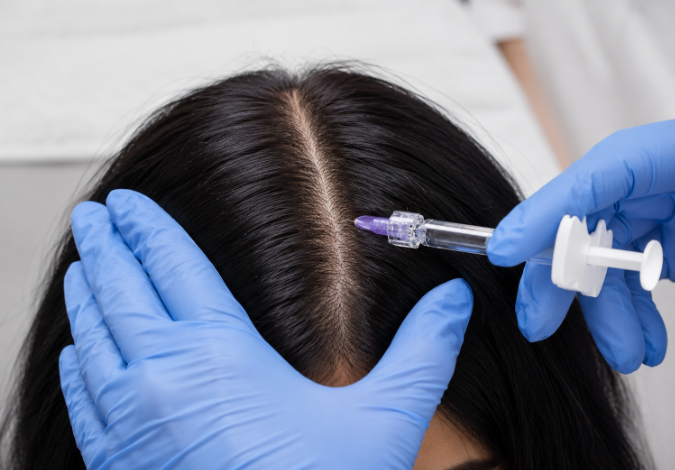
No. The procedure is performed under local anesthesia, which numbs the entire scalp. The only discomfort most patients report is the initial anesthesia injections, like a slight pinch. Once numb (which takes about 10 minutes), you feel nothing. Many patients actually sleep through portions of the surgery.
Q: Is the result permanent? Will the transplanted hair fall out again?
Yes, the result is permanent. The transplanted follicles come from the “DHT-resistant” zone at the back of your head and carry that genetic resistance with them to their new location. They continue growing for life, just like the hair at the back of your head. The only shedding that happens is in the first 2–4 weeks (called shock loss), after which permanent growth begins.
Q: How many grafts will I need? What’s a graft?
A graft is a tiny unit containing 1–4 hairs (as they naturally grow from the scalp). The number of grafts you need depends on your extent of hair loss. Early-stage loss might need 1,000–1,500 grafts. Advanced baldness can require 3,000–4,000+ grafts. Your surgeon will give you a precise estimate after examining your scalp in person and that is why a consultation is the essential first step.
Q: Can women get a hair transplant?
Absolutely. Women with stable, pattern hair loss (such as diffuse thinning along the parting), traction alopecia from tight hairstyles, or scarring from accidents or surgeries are excellent candidates. Female hair transplants require specialised techniques because women typically do not shave the donor area. At Elixify, we have significant experience with female hair restoration.
Q: Will people be able to tell I had a hair transplant?
With modern FUE and DHI techniques performed by an experienced surgeon, the results are completely natural. The key is in the hairline design (which should look age-appropriate and follow your natural pattern) and the angle of implantation (which must match the direction your hair already grows). At Elixify, hairline design is done personally by the surgeon not outsourced to technicians.
Q: How soon can I return to work after a hair transplant?
Most office-based professionals return to work within 3–5 days. By Day 10–14, redness typically fades significantly. If your work involves physical labour, sun exposure, or a lot of dust, your surgeon may recommend 2–3 weeks before returning. We provide a medical certificate for leave if needed.
Q: What is the difference between FUE and DHI? Which is better for me?
FUE (Follicular Unit Extraction) involves creating tiny recipient channels first, then implanting grafts as it allows for denser sessions. DHI (Direct Hair Implantation) uses a Choi pen to implant grafts directly without pre-made channels and it’s more precise for hairline work and causes slightly less scalp trauma. Neither is universally “better” and the right technique depends on your specific hair loss pattern, graft count, and whether the donor area needs to be shaved. Your surgeon will recommend the most suitable one after assessment.
Q: How do I know which technique FUE, DHI, or Sapphire is right for me? The right technique depends on your specific hair loss pattern, the number of grafts needed, and whether you prefer the donor area to be shaved or not. FUE is the most versatile and widely used. DHI is preferred for hairline precision and higher density. Sapphire FUE is ideal for those wanting faster healing and minimal tissue trauma. Your surgeon at Elixify will assess your scalp in detail and recommend the technique best suited to your individual goals and book a consultation to get a personalised plan.
Q: I’m only 24 years old. Is it too early to get a hair transplant? This is one of the most important questions and the honest answer is: it depends. At 24, your hair loss pattern may not have fully declared itself yet, which means transplanting too early could leave gaps as hair loss progresses around the transplanted area in future years. Most surgeons recommend waiting until around 25–28 when the pattern is clearer. In the meantime, non-surgical treatments like GFC or Exosome Therapy can slow the progression and preserve existing hair. Come in for a consultation our team will give you an honest, age-specific recommendation.
Q: Is there any alternative to hair transplant if I’m not ready for surgery? Yes. For those not ready for surgery or in early stages of hair loss, Elixify offers GFC Hair Treatment, a non-surgical injection therapy that uses growth factors derived from your own blood to stimulate hair follicles. There is also Exosome Therapy, which delivers cell-regeneration signals directly to the scalp. These treatments work well to slow loss, improve hair quality, and maintain density and they can also be combined with a transplant for superior results.
Ready to Reclaim Your Hair and Your Confidence?
Book a consultation with Elixify’s hair specialists in Chennai. Get your personalised hair loss assessment and graft estimate with zero pressure and zero obligation.
Book a Consultation | Call Now: +91 93840 66702