
Hair Transplant in Chennai: The Complete Guide to Techniques, Recovery & Real Results
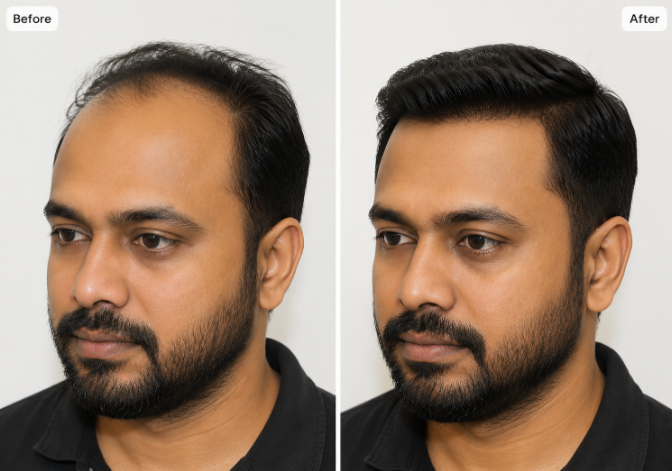
You look in the mirror and notice the hairline that keeps moving back, the thinning patches that are getting harder to hide, the cap you’ve started wearing every day just to feel confident. Hair loss affects nearly 60% of Indian men by age 35 and a growing number of women too. And while shampoos, oils, and home remedies promise the world, most of them simply don’t address the root cause because once a follicle is dead, no topical product can bring it back to life. That’s where a hair transplant comes in. Not as a last resort, but as a medically proven, permanent solution that uses your own living hair follicles to restore what’s been lost. If you’ve been wondering whether a hair transplant in Chennai is right for you, how it works, whether it’s painful, and where to get it done safely this guide answers every single one of those questions. Quick Stats: 98% Graft Survival Rate · 6–12 Months for Full Results · 1–3 Sessions Needed · Lifetime Lasting Results What Exactly Is a Hair Transplant? Think of your scalp like a garden. Some areas of this garden, specifically the back and sides of your head have really strong, healthy plants (hair follicles) that are genetically resistant to the hormone DHT (Dihydrotestosterone the main reason most people go bald). Other areas, like the top and front, are more vulnerable to DHT and start losing hair over time. A hair transplant procedure is basically a process of taking those strong, DHT-resistant plants from the back of your garden and replanting them in the areas where the plants have died. Because these follicles are genetically resistant to balding, they continue to grow even in their new location permanently. The transplanted hair is 100% your own hair. There’s no synthetic material, no foreign body, no wig, just your real hair, relocated to where it’s needed most. This is what makes hair transplantation the only permanent solution for hair loss that science currently offers. Expert Insight: Hair transplant surgery has come a very long way in the last decade. The old days of “hair plugs” that looked unnatural are over. Modern FUE and DHI techniques create results so natural that even your barber won’t be able to tell the difference. Not sure if you’re the right candidate? Book a expert assessment at Elixify → Why Does Hair Loss Happen in the First Place? Understanding why your hair is falling is just as important as knowing how to fix it. Hair loss (medically called alopecia) has several causes, and not all of them need a hair transplant. Here are the most common ones: Genetic Hair Loss (Androgenetic Alopecia) This is the most common reason responsible for about 95% of all hair loss cases. It’s what people commonly call “male pattern baldness” or “female pattern hair loss.” If your father, grandfather, or maternal uncles have gone bald, there’s a higher chance you might too. This type follows a predictable pattern: in men, it starts at the temples and crown; in women, the parting gradually widens. Stress-Related Hair Loss ( Telogen Effluvium) Major stress, illness, surgery, or even a crash diet can push large numbers of hair follicles into the resting phase, causing them to fall out in clumps 2–3 months later. The good news? This type is usually temporary and hair often grows back once the cause is addressed. Non-surgical treatments like GFC Hair Treatment or Exosome Therapy work well for stress-related hair loss. Medical Conditions Thyroid disorders, iron deficiency, PCOS (in women), scalp infections like fungal or bacterial infections and autoimmune conditions like alopecia areata (patchy hair loss) can all cause significant hair fall. These require treating the underlying condition first. Traction Alopecia Years of tight hairstyles, braids, ponytails, hair extensions can permanently damage follicles along the hairline. Hair transplant is often the only solution for this type of hair loss. Important: A hair transplant works best when your hair loss has stabilised. If your hair is still actively falling in large amounts due to a medical condition, your doctor may recommend treating that first before proceeding with a transplant. Who Is the Ideal Candidate for a Hair Transplant in Chennai? One of the first things people ask is, “Is a hair transplant right for me?” The honest answer: not everyone is an immediate candidate, but most people with stable hair loss are. Here’s how specialists determine suitability: You are typically a good candidate if you are over 22 years of age (when hair loss pattern is more predictable), have sufficient donor hair at the back and sides of your head, have been experiencing hair loss for at least 1–2 years that has now slowed or stabilised, are in good general health with no active scalp infections, and have realistic expectations understanding that transplanted hair takes 6–12 months to fully grow. You may need to wait or explore alternatives if you are a teenager with rapidly progressing hair loss, have very limited donor hair density, have a blood-clotting disorder or uncontrolled diabetes, or are pregnant or breastfeeding. In such cases, non-surgical alternatives like GFC (Growth Factor Concentrate) Hair Treatment may be a better starting point to slow further loss and stimulate regrowth. Unsure if you qualify? Our specialists assess your hair loss grade and recommend the right path FUE vs DHI vs Sapphire: Which Hair Transplant Technique Is Best? This is the most common area of confusion. Let’s break down the three main techniques: FUE (Follicular Unit Extraction) : Most Popular Individual follicles are extracted from the donor area one by one using a tiny punch tool (less than 1mm). No linear scar. Fastest recovery among all methods. DHI (Direct Hair Implantation) : Most Precise A special pen-like device (Choi pen) implants follicles directly without pre-making incisions. Ideal for hairline restoration and higher density results. Sapphire FUE, Latest Technology Same as FUE but uses sapphire (a gemstone) blade to create recipient sites. Sapphire blades cause less tissue trauma, resulting in smoother healing
Exosome Hair Therapy in Chennai: Complete Guide to Regrowing Your Hair Using Stem Cell Science
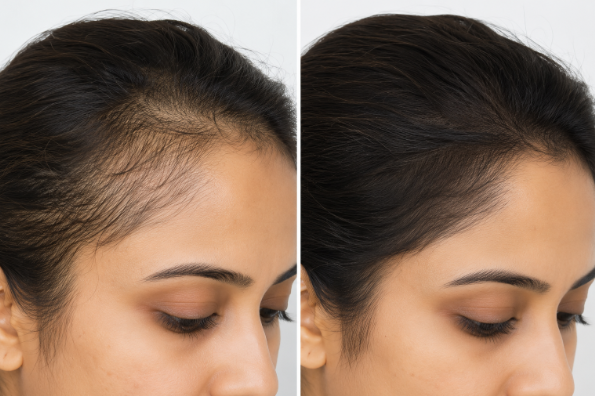
Why Are You Losing Hair? You’ve tried oils. You’ve changed shampoos. You’ve taken biotin supplements and avoided hot showers. And yet every morning, the pillow tells a story you don’t want to read. Hair loss can feel personal. Like your body is failing you. Like something is wrong that you can’t fix. But here’s the truth: hair loss is biological, not your fault and in 2026, there are real solutions that work at the cellular level, not just at the surface. Over 80 million people in India experience some form of hair loss. It affects teenagers with exam stress, women with hormonal changes after pregnancy or PCOS, men with genetic pattern baldness, and elderly individuals whose follicles have simply slowed down. The good news? Most of these causes can be addressed if you choose the right treatment. And one of the most powerful options available today, right here in Chennai, is Exosome Hair Therapy What exactly are exosomes? Your cells, especially stem cells, are constantly trying to communicate with each other. To do that, they pack important messages (proteins, growth signals, genetic instructions) into tiny bubbles and release them into the bloodstream or surrounding tissue. These tiny bubbles are called exosomes. They travel to neighbouring cells, get absorbed, and deliver their message: “Start growing!”, “Repair this tissue!”, “Calm down the inflammation!”, “Build new blood vessels here!” The Scientific Explanation Exosomes are extracellular vesicles measuring 30–150 nanometres in diameter roughly 1/1000th the width of a human hair. They are secreted by all cell types but are most therapeutically potent when derived from mesenchymal stem cells (MSCs). Each exosome carries: Key fact: A single therapeutic exosome preparation contains thousands of different signalling molecules far more than any other injectable hair treatment including PRP or GFC. How Exosome Therapy Regrows Hair – Step by Step To understand how exosomes help, you first need to understand the hair growth cycle. The Hair Growth Cycle Your hair is not always growing. Each strand goes through a cycle: ANAGEN (Growing) → CATAGEN (Slowing) → TELOGEN (Resting) → EXOGEN (Shedding) → ANAGEN again Phase Duration What Happens Anagen 2–7 years Active growth, your hair gets longer every day Catagen 2–3 weeks Growth slows, follicle shrinks inward Telogen 3 months Hair stops growing, rests in the follicle Exogen A few days Old hair sheds, new cycle begins Hair loss happens when: Too many follicles stay in Telogen (resting) for too long DHT (a hormone) causes follicles to miniaturize each cycle producing thinner, shorter hair Scalp inflammation slowly destroys follicle cells Blood supply to the scalp decreases How Exosomes Fix Each of These Problems Mechanism 1 : Waking Up Dormant Follicles Many “bald” areas are not truly bald; the follicles are simply sleeping. Exosomes contain Wnt/β-catenin signalling proteins that activate the follicle’s growth cycle. Think of it like recharging a phone that runs out of battery. The phone isn’t broken, it just needs the right signal. Mechanism 2 : Building New Blood Vessels (Angiogenesis) Exosomes are rich in VEGF (Vascular Endothelial Growth Factor) , the body’s natural instruction to grow new blood vessels. By improving scalp microcirculation, exosomes ensure each follicle receives the oxygen and nutrients it needs to grow thick, strong hair. Mechanism 3 : Stopping Scalp Inflammation Hidden inflammation around the hair follicle is one of the most underdiagnosed causes of hair loss. Exosomes deliver anti-inflammatory cytokines and miRNA that calm this chronic inflammation, removing a key obstacle to hair growth. Mechanism 4 : Activating the Dermal Papilla The Dermal Papilla (DP) is the “brain” of every hair follicle, a tiny cluster of specialised cells at the root that controls the entire growth cycle. When exosomes reach the DP, they activate it to send “GROW NOW” signals up through the follicle. Studies confirm that exosomes significantly increase DP cell proliferation. Mechanism 5 : Blocking DHT at the Gene Level Here’s the most impressive part. The microRNAs inside exosomes can directly downregulate the gene expression of 5-alpha reductase, the enzyme that converts testosterone into DHT, the hormone responsible for androgenetic alopecia (pattern hair loss). This means exosome therapy doesn’t just treat symptoms it can partially address the genetic root cause. Where Do the Exosomes Come From? At Elixify, we use clinically validated, GMP-certified (Good Manufacturing Practice) exosome preparations derived from: Mesenchymal Stem Cells (MSC) – The Gold Standard MSCs are specialised healing cells found throughout the body. The most potent source for therapeutic exosomes is umbilical cord Wharton’s Jelly donated ethically at birth, these cells are young, highly active, and produce exosomes with an exceptionally rich growth factor profile. Why umbilical cord-derived MSC exosomes are superior: Collected from young, healthy cells (no age-related degradation) Standardised every batch is tested for particle count, size, and protein content Ethically sourced no harm to mother or baby Consistent across every patient (unlike PRP, which depends on your own blood quality) Adipose-Derived Stem Cells (ADSC) Fat tissue contains abundant MSCs. ADSC-derived exosomes are particularly rich in VEGF and PDGF, making them excellent for improving scalp blood circulation. Important note from Elixify’s clinical team: Not all exosome products are equal. Some clinics use diluted or poorly characterised preparations. At Elixify, every exosome product we use comes with documented particle concentration, protein analysis, and safety testing. We will always show you the product specifications if you ask. Exosome vs PRP vs GFC: Which Is Actually Best? This is one of the most common questions we receive at Elixify. Let’s settle it with an honest, detailed comparison. Which Should You Choose? PRP is a good starting point for young patients with mild, early hair loss and good blood quality. GFC at Elixify is more concentrated than PRP, gives faster results, and is ideal for moderate hair loss where natural growth factors are still present. Exosome Therapy is the most advanced option recommended when hair loss is moderate to significant, when PRP or GFC haven’t given satisfying results, or when you want the most powerful single-treatment option available. Many of our patients at Elixify start