
Endolift Treatment: The Complete Guide to Laser Skin Tightening, Lifting, and Fat Reduction Without Surgery
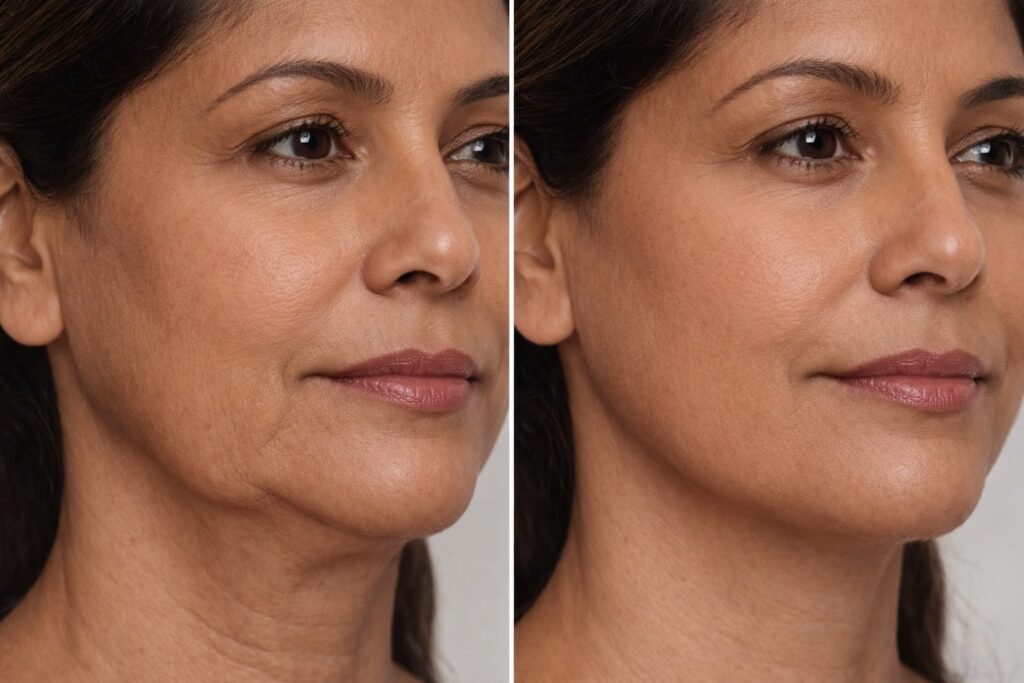
You have not done anything wrong. You have been eating reasonably well, sleeping enough, maybe even wearing sunscreen. And yet, somewhere in your mid-thirties or forties, the face you see in the mirror has started to feel unfamiliar. The jawline is softer. There is extra fullness under the chin that was not there before. The skin along the neck feels less firm when you touch it. Here is what most people do not realise: this is not a surface problem. It is a structural one and that is why no cream, serum, or facial massage has been able to fix it. Endolift is a minimally invasive laser treatment that targets skin looseness, localised fat, and loss of facial definition from inside the tissue layer where these problems actually begin. No surgery. No general anaesthesia. No weeks hiding indoors recovering. This guide covers everything you need to understand about Endolift, what it is, exactly how it works inside your skin, who it is right for, what results look like, and what the experience at a clinic like Elixify actually involves. Whether you are 28 or 58, this is written so that anyone can fully understand it. What Is Skin Laxity and Why Does It Happen? Before understanding the treatment, it helps to understand the problem it solves. Skin laxity is the medical term for loose or sagging skin that has lost its internal support and no longer holds its shape firmly. Think of your skin like a mattress. When it is new, the springs inside hold everything firm and in place. Over time, those springs weaken. The surface starts to sag. You cannot fix a sagging mattress by changing the fabric on top. You have to address what is happening inside. In skin, the “springs” are two proteins: collagen and elastin. Collagen is the protein that gives skin its structure, firmness, and shape. Elastin is the protein that lets skin snap back after it is stretched or moved like a rubber band. From around the age of 25, your body produces less of both. The decline is gradual at first, then becomes more visible through the thirties and forties. Several factors accelerate this process, especially relevant in a city like Chennai: Sun exposure (UV radiation) is the single biggest accelerator of collagen breakdown. Chennai has some of the highest UV intensity in India year-round, meaning cumulative sun damage builds faster here than in cooler climates. Even if you do not burn, UV rays are silently degrading collagen beneath the surface every day you step outside without protection. Gravity pulls on the soft tissue of the face constantly. As internal support weakens, the fat pads that once sat high on the cheekbones and defined the jawline slowly shift downward contributing to jowls and a heavier lower face. Lifestyle factors including dehydration, inadequate sleep, smoking, and a diet low in antioxidants all weaken the skin’s structural integrity further. The result is that the lower face and neck where gravity pulls hardest and where fat tends to accumulate are usually the first places to show visible change. What Exactly Is Endolift Treatment? Endolift is a minimally invasive, non-surgical laser treatment designed to tighten loose skin, reduce localised fat deposits, and lift facial contours by working directly beneath the skin’s surface. The word “minimally invasive” means it goes just beneath the skin, but it does not involve surgery, cuts, stitches, or general anaesthesia. Think of it as a highly precise treatment that addresses the layer of tissue where the real problem exists, without the risks and recovery of an operation. Developed by Eufoton in Italy, Endolift uses ultra-thin micro-optical fibres each about the thickness of a single strand of human hair, inserted under the skin through entry points so small they are invisible to the naked eye after healing. These fibres deliver laser energy at a precise wavelength of 1470nm directly into the tissue layer below the dermis (the main layer of skin) and above the muscle, the layer where looseness, excess fat, and sagging originate. Endolift has been used clinically for over a decade. It is FDA-cleared and is one of the most rigorously studied non-surgical skin tightening options available. Clinics like Elixify skin clinic are among the early adopters bringing this advanced technology to Chennai, making globally established treatments accessible locally without the need to travel. How Does Endolift Work? The Science Explained Simply Step 1: The Entry Point and the Fibre The procedure begins with a local anaesthetic applied to the treatment area. This numbs the skin so you feel little to nothing during the procedure. Once numb, the doctor creates a tiny entry point using a fine needle. The entry is so small it requires no stitch and heals on its own. Through this entry point, the micro-optical fibre is guided beneath the skin into the superficial hypodermis the layer of fat and loose connective tissue that sits just below the dermis (the main skin layer). This is exactly the layer responsible for jowls, double chin, and neck looseness. Think of it like placing a tiny torch under a blanket the light reaches the problem area directly, without disturbing everything else around it. Step 2: The 1470nm Laser Wavelength The number 1470nm refers to the wavelength of light the laser emits. This specific wavelength is important because it is selectively absorbed by water molecules and fat. In practice, this means the laser energy targets fat cells and water-rich loose tissue while leaving the surrounding structures relatively undisturbed. When the laser energy reaches fat cells, it heats them, causing them to break down and emulsify (turn into liquid). The body naturally processes and eliminates this broken-down fat over the following weeks similar to how the body handles fat after liposuction, but on a smaller, more precise scale. At the same time, the thermal (heat) energy activates fibroblast cells the cells in your skin responsible for producing collagen. Heating these cells sends them a signal: produce more collagen. This process is called